Key Points
- Regeneration can’t survive inside industrial systems — industrial agriculture absorbs the language of regeneration while discarding the practice, because it’s built for uniformity, speed, and extraction.
- Regeneration scales by replication, not expansion — healthy systems grow through many small, place‑rooted iterations, not by getting bigger or more centralized.
- Place‑based, community‑anchored economies are the only viable structure — soil, culture, skills, nutrient cycles, and accountability are all local realities that cannot be scaled upward without losing integrity.
- Parallel infrastructure is required — like Will Harris, regenerative producers must build or participate in alternative value chains that keep value local and prevent co‑option.
- Regeneration is relational, not technical — reciprocity, accountability, community governance, and circular nutrient flows are the ethical architecture that holds regenerative systems together.
- Regional is the maximum viable scale — beyond the regional level, relationships thin out, nutrient cycles break, accountability dissolves, and extraction becomes the default.
- Regeneration spreads through pattern, not uniformity — like mycorrhizae or seed rain, regenerative systems propagate through many diverse, locally adapted nodes, not through one model imposed everywhere.
- Producers are one node in a larger web — stewardship emerges from aligned culture, markets, community norms, and policy, not from individual heroism.
- Ethics is now an economic requirement — reciprocity and accountability are not moral luxuries; they are the only way to maintain resilience in a brittle, over‑extended system.
- The future is a mosaic of small, interconnected systems — regeneration succeeds when many local webs of reciprocal relationships thrive, each unique to its place but connected through shared patterns.
If you’re a rancher and you want to be part of a regenerating web of relationships, you have your work cut out for you in today’s world. It’s possible, but you will need to build some of your own infrastructure.
Will Harris’s story at White Oak Pastures is the clearest example of why regeneration can’t survive inside the industrial system. When he transitioned to regenerative grazing, he discovered that the processing facilities around him were built for fast‑finished cattle, uniform carcasses, high throughput, and long supply chains. His animals didn’t fit the template. And the system wasn’t going to change for him. As he puts it, “I had to build my own plant because the system wasn’t built for the kind of food I wanted to produce.”
That’s the heart of co‑option.
When a regenerative practice doesn’t fit the industrial model, the model doesn’t adapt; it absorbs the language and discards the practice. Organic went through this. Regeneration is going through it now. The system keeps the marketing value and rejects the structural change.
Harris refused that path. Instead of letting his work be diluted, he built parallel infrastructure: a red‑meat abattoir, a poultry plant, a tallow house, a pet‑food kitchen, a composting operation. By internalizing the entire value chain, he kept the integrity of the practice intact. And in doing so, he rebuilt his town. White Oak Pastures became the largest private employer in the county. Bluffton revived. Value stayed local instead of being siphoned off by distant corporations.
His story shows exactly why co‑option is the rational economic strategy for industrial agriculture. It’s cheaper to borrow the language of regeneration than to rebuild the system regeneration requires. And it shows why regeneration must build parallel economies instead of trying to fit into industrial pipelines. If Harris had tried to integrate into the existing system, his work would have been standardized, diluted, and eventually absorbed. He would have been swallowed up by the industrial system just like organic.
Instead, he built something the industrial system couldn’t co‑opt: a closed‑loop, place‑based, community‑anchored economy that keeps value where it’s created.
Regeneration Does Not Scale the Way Industrial Systems Scale
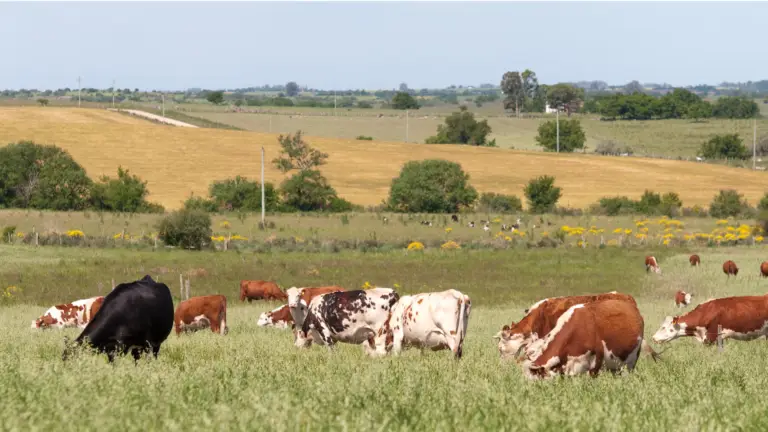
It does not expand outward, swallowing more land, more labor, more capital, more supply chains. That’s how empires are built, not how relationships are developed between people and ecosystems. Regeneration scales the way life scales: through replication, not expansion. A healthy system doesn’t grow bigger. It grows more numerous, more diverse, and more locally adapted. It spreads by pattern, not by size.
Taking Will’s story as an example means we need many iterations of his operation. And they’ll all be different. Place-based and community-governed webs take into account all the agents. The health of the soil, the food culture, the skills of the community, the needs of the area, the topography, and so much more. The iterations will fit the place. Instead of trying to create a model that imposes itself on the land like a one-size-fits-all solution, we have to ask the place what it needs for all to prosper.
Of course, this sounds very much like indigenous wisdom. And regenerating solutions are informed by the wisdom of the elders. We have to sit with those elder farmers who understand what it took to grow successfully without chemicals and high tech. Then we need to think about what the place needs to recreate those reciprocal relationships between all the agents.
Farmers were warning us long before science caught up. In the pages of Organic Gardening in the 1940s, 50s, and 60s, they wrote about what they were seeing with their own eyes. “After the spray, the orchard was silent,” one farmer wrote in 1953. Another lamented in 1957, “When the hedges went, the partridges went with them.” They described soils that no longer held water, fields that no longer held birds, and communities that no longer held together.
J.I. Rodale himself said it in Organic Front in 1948: “Healthy soil is the birthright of every creature.” These were not abstract environmental concerns. They are the eye-witness accounts of earthworms disappearing, soil losing structure, and hedgerows being bulldozed. The destruction of the web of reciprocal relationships. A living world gone quiet.
We got the Organic Gardening magazine every month when I was growing up. My dad read it from cover to cover. I was a kid who wasn’t all that keen on growing food, but I found interesting bits. It’s where I first learned about Ruth Stout and “Lazy Gardening,” a perfect technique for a teenager.
I’m not suggesting we go back to the agriculture of the 1920s and 30s, but I am suggesting we think more about what a particular place can handle easily and regeneratively. Walking the land and considering it from all angles, talking to many people in the area about what is needed, and surveying the skillsets available are the first steps to regenerative agriculture as a system (RAaaS). As a web of reciprocal relationships.
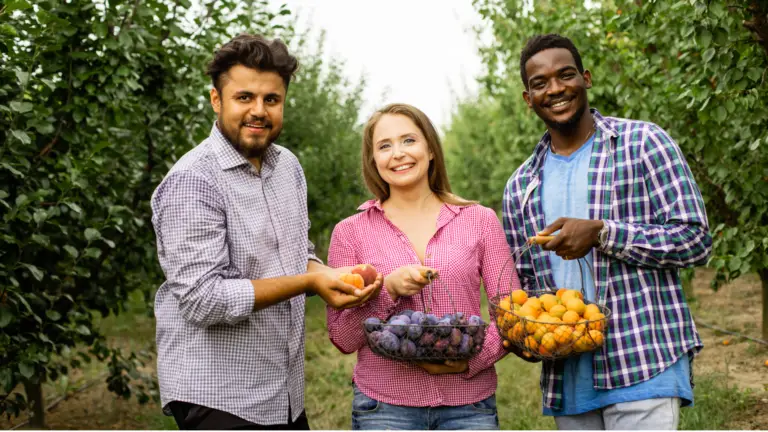
As I look back on my childhood on a diversified homestead, I realize there were crops we could have grown, but my parents opted not to include them. And it had a lot to do with skillsets. We didn’t have a fruit orchard. We had lots of berries, but no apples, pears, peaches, or plums. Why? All of them grow easily in Michigan. I can only surmise, but fruit trees require skillsets of pruning, integrated pest management, monitoring microclimates (frost pockets), and the patience of a saint because of the time it takes before a harvest.
I don’t think these were skill sets my father (who was the gardener) had in abundance. Especially the patience it takes to finally see a harvest. Fruit trees are labor-intensive, and if you are also working off-farm, the timing is hard to get right.
But I did pick apples at a local orchard as a seasonal worker, and brought home “drops” for pies. We bought bushels of local peaches and pears for canning. The skills of others made up for our lack. And I learned how to can fruit, a skill I use every year as fruit ripens.
The relationships between my family and the community were much more diverse than I realized growing up within the structures. We tend to think everyone lives the same way we do. The beauty of regenerative living is that diversity is the norm.
Instead of thinking everyone should be the same, we have to cherish the differences and secure our webs of reciprocal relationships around those random nods. Every web is unique. Every place has a perfect fit. This is a shift in thinking, not just agriculture, but about consumption. It requires observation and pattern recognition. It requires place-based and ecologically informed actions.
This is the shift the regenerative movement must make if it wants to avoid the fate of every other ecological idea that became a corporate marketing category. The problem is not that regeneration is too small. The problem is that we keep trying to scale it using the logic of the very system it is meant to transform.
Industrial agriculture scales by expansion; consolidate, centralize, and stretch the supply chain so far that every touchpoint becomes a place to extract value. That’s the logic: get bigger, get faster, get more uniform.
Regenerative agriculture scales by multiplication. Instead of one system getting larger, many place-based systems take root. Instead of consolidation, replication. Instead of stretching the chain, shortening it. Regeneration grows not by becoming big, but by becoming numerous, diverse, and each a unique solution.

Local and Regional Systems Are the Only Viable Path Forward
Every ecological system on Earth is structured around place. Although cities look like they run on speed, they actually run on neighborhoods. Every city is a patchwork of small places where people build trust, share resources, and look out for one another. The relationships that matter don’t happen at the scale of the skyline; they happen at the scale of the block, hence the popularity of “block parties”! Regeneration belongs there because it’s built on the same logic of place‑rooted connection.
Soil types, rainfall patterns, cultural histories, community relationships, and nutrient flows are all local realities. They can’t be abstracted upward into a global model without losing the very qualities that make them regenerative.
This is why corporations can adopt practices, labels, and metrics, but they can’t adopt:
- place
- reciprocity
- community governance
- circular nutrient cycles
- local accountability
These are not “best practices.” They are relational obligations that only exist in place.
Global logistics and shareholder incentives are anonymous and without obligations. By their very nature, they are extractive.
Across Indigenous teachings, Christianity, Judaism, and agrarian traditions, a shared truth emerges: life is relational and always rooted in place.
Humans are embedded in a web of responsibilities that includes land, water, animals, ancestors, and future generations, not in the abstract, but in the specific places where we live, work, and belong. Indigenous elders call this All My Relations, a reminder that kinship extends across the living world. Christian scripture calls it the Body of Christ, a vision of many members held together in one living whole. Jewish law expresses it through Shmita and stewardship, grounding ethics in the land itself. Agrarian writers such as Wendell Berry speak of community and belonging, the ties that form when people commit to caring for a particular place over time.
Different languages, same insight:
We live because we are connected. We thrive because we are accountable to each other and to the places that sustain us.
Replication: How Regeneration Actually Spreads
In ecological terms, regeneration spreads the way:
- mycorrhizae spread through soil
- prairies spread through seed rain
- forests spread through succession
- villages spread through kinship
- traditions spread through apprenticeship
Not by expansion, but by propagation. A regenerative farm doesn’t become a bigger regenerative farm. It becomes more diverse. Ask any regenerative rancher about the richness of his pasture, and you’ll get a story of the appearance of plant species that haven’t been seen for decades.
That regenerative farm becomes a model that other farms can adapt to their own place.
Communities that support their local food producers don’t necessarily become bigger. But many do simply because people want to live there. Community agricultural revival is happening all across the United States. In the Driftless Region of Wisconsin, people are drawn to the co-ops, organic farming, and strong food culture.
The Shenandoah Valley in Virginia and the Finger Lakes region in New York are examples of areas that just feel good. They’re places where people want to raise their kids. When a rural place becomes liveable, lovable, and economically coherent again, people return.
This is a pattern that other communities can interpret through their own culture and resources.
Regenerative food rarely becomes a well-known national brand. And for good reason. It’s part of the regional fabric of producers, buyers, processors, and eaters who know one another. This is regeneration, not at scale but at replication, through many small, place‑bound systems that share a pattern but not a blueprint.
The Ethics That Hold The Pattern Together
Regeneration is not a technique, it’s not practices. It’s an ethical framework of joy practiced as responsibility. A way of being in right relation with the world that feeds us.
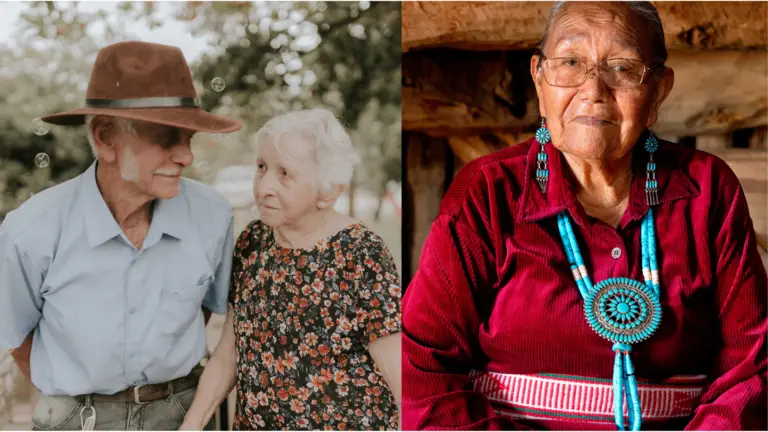
The Indigenous worldview of “All My Relations” or the Christian view of ‘the Body of Christ’ or the Jewish “Shmita” are not metaphors. They are the underpinnings of the oldest governance systems on Earth. Across the globe, relational architecture is fundamental for social and ecological reciprocity
These are relational architectures that teach us how to live:
- Reciprocity — giving back in proportion to what we take.
- Accountability — being answerable to land, water, and community.
- Local nutrient cycling — keeping fertility close to its source.
- Community governance — decisions held by the people who live with the consequences.
- Stewardship over domination — tending rather than controlling.
- Place‑based decision‑making — letting the land teach us what is appropriate.
- Circular flows of value — ensuring benefit returns to the community that generated it.
Corporations can imitate the practices of regeneration, cover crops, drone shots, and the language of care (without changing the system). But they can’t imitate relational responsibility. Long supply chains don’t have obligations between producers, processors, consumers, or the place that gives its abundance.

Why Regional Is the Maximum Viable Scale
Local is where relationships form. Regional is where they stabilize.
As an adult, I’m now aware of the complexity of community relationships. They are more evident, I believe, in a small town than in a city. Small towns have a transparent web of relationships. At the local cafe, you know if you’re welcome at the “farmer’s table” or not. Even if you’re a farmer. Everyone knows the role they play in keeping the community active and alive.
City council meetings are where cousins disagree. Where decisions are made that impact each person – personally. Those relationships count. They keep us all accountable. Oh, and those roles? They change over time. As the community changes.
Beyond the regional scale, relationships thin out. We don’t really know how a decision we make affects anyone else. Accountability dissolves. The people we may impact are anonymous. It’s hard to empathise with someone you’ve never seen. And it’s easy to lay blame on someone you don’t know.
With long supply chains, it’s impossible to maintain nutrient cycles. The value in one place becomes the waste in another, and neither knows the other or the impact.
It’s not just physical cycles that break down; it’s also cultural norms that become something we read about but never experience. As soon as these norms become abstract, they become “other.” And that’s when it becomes impossible to effectively steward the land or feel accountable for our decisions.
This is why every food system on Earth, Indigenous, biblical, or ecological, was and is regional.
The region is the scale at which:
- reciprocity is visible
- accountability is enforceable
- nutrient cycles can close
- culture can hold meaning
- community can govern itself
Beyond the regional scale, extraction becomes the default. Ask yourself, do you know where your food comes from? Do you know the producers and processors? Have you introduced yourself to your local community and become a part of that local web of reciprocal relationships? This is not a passive arrangement. This is not something that “happens to us.”
We have a shared responsibility, an obligation, to tend the health and well-being of the relationships that sustain us. This is the ethical heart of regeneration. We are accountable to each other, to place, and to the cycles that feed us. When we lose sight of that, it’s all over.

The Role of Producers in a Replicating System
In a web of reciprocal relationships, producers are not the center of a loop, because there is no loop. Life is not circular; it is patterned, nested, and relational. Producers don’t control that pattern, but they do participate in it. Their choices become one of the initiating forces that help the pattern replicate or degrade.
But their choices aren’t made in isolation. Cultural norms, community expectations, market pressures, policy signals, and the lived memory of the land itself shape them.
Producers’ decisions influence:
- soil health
- water flow
- nutrient cycles
- community resilience
- cultural memory
- economic stability
But they do so as just one node in a larger pattern. Farmers, ranchers, and other producers aren’t acting alone.
When producers act from domination, forcing soil, extracting yield, and controlling outcomes, the pattern collapses. But domination rarely comes from individual intent. It emerges from cultural stories about efficiency, from markets that reward extraction, from communities that have forgotten their own ecological memory.
This is what commodity crop production is in the United States. We have long passed the point where efficiency is beneficial. Commodity producers today are caught in a pattern where costs rise structurally, prices fall cyclically, and risk is socialized through crop insurance. This is not a market failure. It’s the market working exactly as designed.
When producers act with stewardship by listening, tending, and participating, the pattern repeats. But stewardship is also not an individual virtue. It emerges from cultural norms that honor limits, from communities that value reciprocity, from markets that reward care, and from elders who remember how to read a landscape.
Regeneration is not the heroism of producers. And we are not trying to feed the world; let’s get over that myth.
It is the alignment of producers, community, culture, and markets with the living pattern of the land. RAaaS is not about individual stewardship, but about collective alignment. It only happens when
- Producers practice stewardship
- Communities reinforce reciprocity
- Markets reward care
- Culture remembers its ecological responsibilities
- Policy protects the conditions for life
When these align, the pattern replicates. When they fracture, extraction fills the vacuum.
If we look at the story of White Oak Pastures (and there are many others), that alignment is what makes regenerative ranching work. Will Harris stewards his land, and he also stewards individuals with new ideas. They add value to the community and to Will’s legacy as the rancher who saw reciprocity as a keystone value.
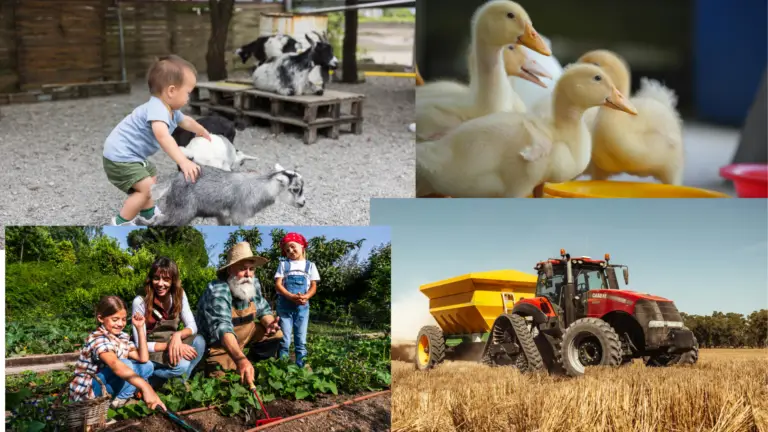
The Future Is Many Small Systems, Not One Big One
The regenerative future is not a scaled‑up version of the present. But what exactly is the present? What is it that we are in? Because it’s hard to see a pattern when you’re in it.’m not going to define the present by dates or technologies. We need to look at our world through the lens of patterns. We should look at our present (and future) as a pattern of relationships. What’s connected, what’s severed, what’s amplified, and what’s ignored. When you look at the present through this lens, it becomes obvious that we are living inside a pattern that is both unstable and revealing.
The present is the moment where the dominant pattern, extraction, anonymity, and expansion, is failing. And I believe the regenerative pattern of reciprocity, proximity, and replication is re‑emerging.
We’re so far into overshoot that it’s very scary. The dominant pattern of the last century has been scaling through expansion, centralization of power, global supply chains – very brittle, and greater distances between decisions and consequences.
This pattern is only efficient on paper. It doesn’t take into account any of the externalized costs of our economic structure. The costs to ecosystems, human health, societal well-being, or cultural anchoring. And it’s a system that is getting more costly and difficult to maintain.
But we don’t need to throw out the baby with the bathwater, as they say. We can use what serves reciprocity, incorporate 21st-century technology, and create an integrated web. What we need is a scaled-out mosaic of:
- local food webs
- regional processing
- community governance
- place‑based knowledge
- relational accountability
- circular flows of value
We can’t return to the past, and we shouldn’t try. The past held wisdom, but it also held exclusions, inequities, and limits we must not replicate. What we need now is not nostalgia, but integration. Life has always scaled through replication, not expansion. Regeneration follows the same pattern.
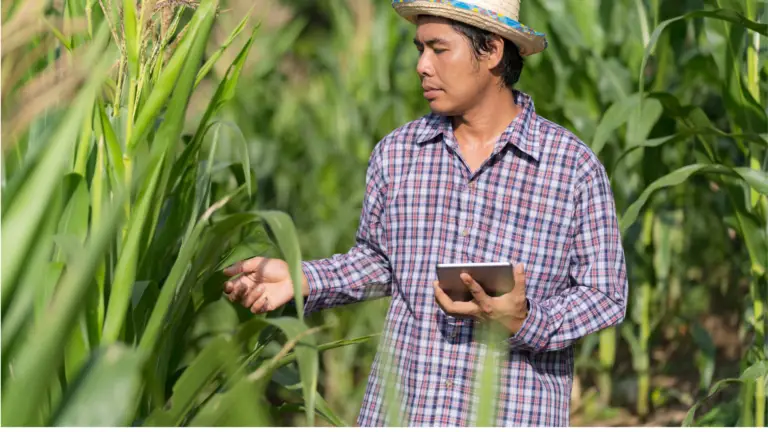
Technology Without Displacement, Knowledge Without Abstraction
The future requires a relationship between technology and land that is neither romantic nor extractive. Technology is not the enemy of regeneration; disconnection is. Tools that help us see patterns, track nutrient flows, shorten supply chains, or strengthen community governance can support regeneration, but only when they operate inside a multinodal web of reciprocity.
Tech only works when it serves place, strengthens relationships, and illuminates cycles. We don’t need robots and tech to replace relationships or accelerate extraction. This is the difference between tools of domination and tools of belonging.
Motorized chicken tractors, robotic milking machines, drone imagery, and all kinds of tools that help align with ecological reality need to be used as the place demands. We have to acknowledge that not all tech works in all situations. There is no one-size-fits-all, and there never has been. Ask yourself, does the tech I’m using shorten the supply chain, close nutrient loops, or support community governance? In other words, does it strengthen reciprocity? If not, reexamine that tool.
The Ethics of Reciprocity Is Not a Luxury - It’s an Economic Requirement
For most of the industrial era, ethics was treated as a “nice to have,” something added after the economic model was already set. But in a world of fragile supply chains, degraded soils, volatile markets, and collapsing margins, ethics is no longer optional. Reciprocity, accountability, and care are now economic necessities.
I learned this long before I had the language for it.
Growing up on what today we call a homestead, nothing existed in isolation. If we didn’t give the cows their “treat,” they wouldn’t come in and let us milk them. And then there wouldn’t be any whipped cream for the strawberry shortcake.
If we didn’t return the tools to their proper place, no one could fix the fence before the storm. If we didn’t help Grandma clean out the chicken coop in the spring, we would have puny harvests. Every action had a consequence, and every consequence came back to you, fast. That wasn’t morality. It was reality.
Ethics — reciprocity, accountability, care — is now an economic necessity.
Without reciprocity, systems become brittle.
Without accountability, costs externalize until they implode.
Without care, nutrient cycles break and communities hollow out.
Without belonging, no one feels responsible for the outcomes.
Growing up like I did, belonging wasn’t a feeling; it was a function. The system needed you, and you needed it. Everyone had chores. We were each responsible for what we could give to the efficient running of the household. At least, that’s what we were told. I think my dad and mom could have done a lot of the tasks quicker and easier themselves, but we wouldn’t have gained skills or been a part of the day-to-day. Those are the skills and memories I carry with me now. That’s what our modern systems have forgotten.
The web of reciprocal relationships is not a moral metaphor. It is the infrastructure of resilience. And like any infrastructure, it has to be maintained, not out of virtue, but out of necessity.

The Imperative: Keep the Web Intact
The future depends on our ability to keep the web of relationships — ecological, cultural, and economic intact. Not perfect. Not pure. Jut intact.
Because once the web tears:
- nutrient cycles don’t close
- communities can’t govern
- markets can’t stabilize
- producers can’t steward
- culture doesn’t hold meaning
And no amount of technology compensates for a broken pattern. The regenerative future is not built by scaling one system to serve all places.
It is built by replicating many systems, each rooted in its own place, each connected through reciprocity, each strengthened by the others. This is not a retreat into a romanticized past. It is an advance into a future where life can continue to live.
This is one of a series of posts about RAaaS (regenerative ag as a system). We will be looking at how farmers, ranchers, and community leaders are implementing RAaaS. There are interactions. Take what you think will work for you and adapt it to your situation, your web of relationships, of reciprocity.